A large fraction of investing mistakes aren’t analytical—they’re behavioral.
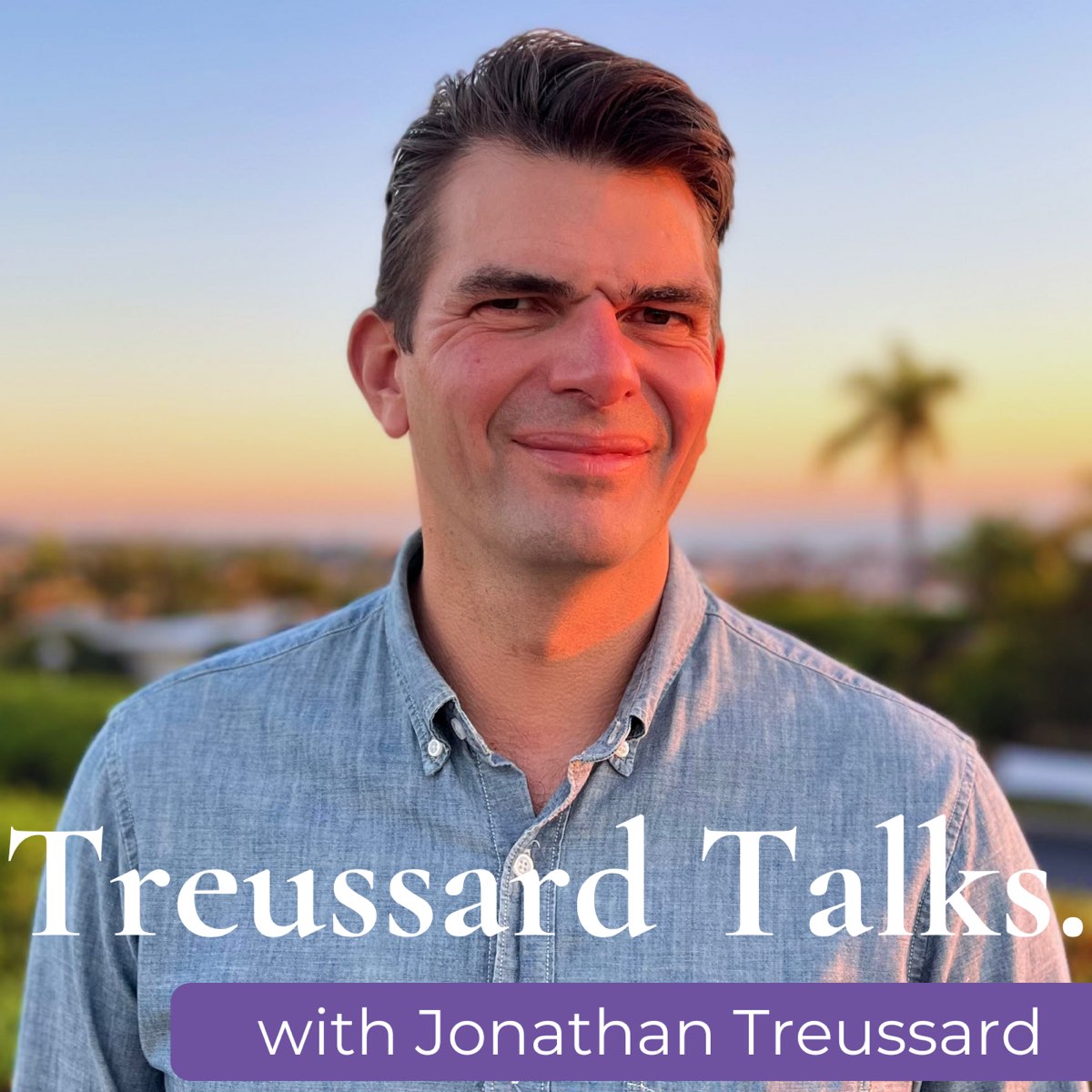
That’s why I wanted to talk to Eduardo Repetto — one of the most systematic minds in the business — on TREUSSARD TALKS.
If you’re an investment industry person, you know about Eduardo.
Caltech Ph.D. who started Avantis in 2019, after being the co-CIO and co-CEO of famed pioneer quant asset manager Dimensional Fund Advisors (DFA).
Avantis, also a systematic quant mutual-fund and ETF shop, has grown to about $125 billion in assets across the U.S., Europe, and now Canada.
If you didn’t know Eduardo, it should give you a sense of his pedigree and his impact.
Eduardo could be imperious about it.
Instead, he holds onto a single idea:
If you’re going to rely on something to make decisions, let it be process, not personality.
Seems simple—maybe even simplistic.
But the layers of interpretations and implications are anything but…
Let’s start at the beginning: what markets are supposed to be vs. the way we actually experience them.
Have you ever stopped to ask yourself why we have these weird human creations we call “markets” in the first place?
Markets exist to exchange assets at fluid prices — and prices move because information changes, for a thousand reasons at once.
We “should” (that’s a dangerous verb…) welcome price moves as a reflection of an ever-changing world.
But instead, they are received as a threat…
A threat to your wealth.
To your standing in the world.
To your ego — g-d forbid you had the gall to make predictions about the future and you turn out to be wrong.
In short, markets are designed to convey information, but they mostly function as an emotional test.
Once you accept that as a core premise (which I am more than willing to do, as someone who teaches behavioral finance to master’s-level finance students), you quickly come to align with Eduardo’s shorthand.
You know who fails emotional tests? People.
You know what helps meet those tests? Processes.
Here is something people do: They reactively bail when markets fall, because you assume that whatever is causing the decline is bound to continue for a while. Then you tell yourself you’ll get back in “when it feels better.” (Bad news: It never feels better. Not soon enough, anyway.)
This is why I talked to Jason Zweig at The Wall Street Journal last year about the “pyramid of regrets” when markets were in a free fall in the week that followed the announcement of tariffs on “Liberation Day.” If you need to get something out of your system, make sure you start with actions you’re least likely to regret down the line.
Anyway, back to my conversation with Eduardo, which you absolutely should listen to.
Build a process around the world as it is, not as you wish it were.
Volatility is the price of admission in capital markets.
Adopt a portfolio risk stance that accepts it.
Eduardo says it’s like taking a plane to get from LA to New York.
There may be traffic on the way to the airport.
If you want to ignore this fact, knock yourself out. But you might miss your flight.
And there may be turbulence while you’re at 36,000 feet.
If you can’t deal with that, take a train or drive your car cross country.
Won’t be as efficient, but those are your (realistic) choices.
Whatever is testing markets next—odd policy choices, massive technological change, or mega IPOs—hold on to two principles…
Accept markets as they are, not as you wish they were.
Build systems and processes for yourself, so that you’re not wrestling your own psychology to the ground next time things start to feel a little spicy out there.
In 2008–09, when I was doing risk management and investment strategy at a large family office, we used to talk about having a “playbook in the drawer” for what might come next.
Not because we thought we could predict the next headline.
Because when things break, you do not suddenly become wiser. You become more you.
So you want the hard thinking done in advance. Then you pull the drawer open and execute.
That’s process over personality.
If you want the full conversation with Eduardo, it’s on TREUSSARD TALKS (Apple Podcasts or YouTube). Listen on a walk, a commute, or during a quiet hour.
And if you know someone who makes great decisions on spreadsheets and bad decisions in drawdowns, forward them this.
Jonathan
Disclaimer: All content here, including but not limited to charts and other media, is for educational purposes only and does not constitute financial advice. Treussard Capital Management LLC is a registered investment adviser. All investments involve risk and loss of principal is possible.
Full disclaimers: https://www.treussard.com/disclosures-and-disclaimers.